
Enlightenment

"Enlightenment" number 93 of 200 from Robert Aitken's book Miniatures of a Zen Master.

Aitken tells of a time when a Japanese monk ask in an informal meeting, "How many people here are enlightened? Raise your hands." Apparently they all sat there stunned as I would have had I been there.

Why would this be stunning? Juxtaposed with yesterday's miniature, I in quite a quandary. Hakuin says "This very body is the Buddha." How can I say that I'm not enlightened? Yet, I surely feel at times unconnected with life, confused, hurt, frustrated, even angry at times. Could it be that these somehow are an expression of enlightenment.

What is it that we mean when we say "I'm enlightened."? We don't hear mature practitioners making that statement. Something tells me that it is a trap. Some conundrum. 


Any error or confusion created by my commentary on
Miniatures of a Zen Master
is solely a reflection of my own delusion and ignorance.
Any merit generated by this activity is solely the result of
Aitken Roshi's clear teaching and is dedicated to
all Buddhas and Bodhisattvas throughout space and time.
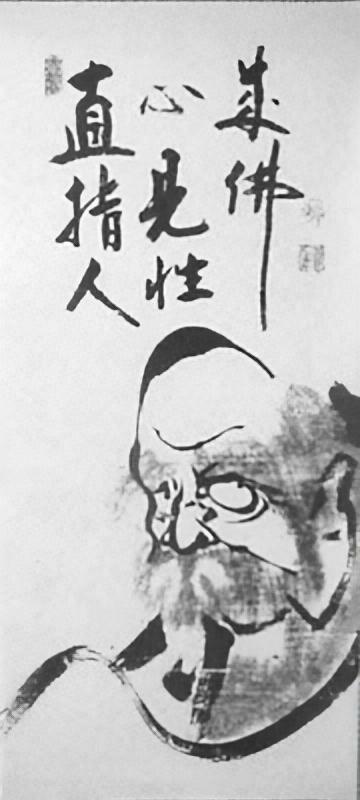

This Very Body

"This Very Body" number 92 of 200 from Robert Aitken's book Miniatures of a Zen Master.


'Song of Zazen'
by Hakuin Ekaku (1685-1768)

All beings by nature are Buddha
As ice by nature is water.
Apart from water there is no ice;
Apart from beings, no Buddha.

How sad that people ignore the near
And search for truth afar:
Like someone in the midst of water
Crying out in thirst;
Like a child of a wealthy home
Wandering among the poor.

Lost on dark paths of ignorance,
We wander through the six worlds;
From dark path to dark path-
When shall we be freed from birth and death?

For this the zazen of the Mahayana
Deserves the highest praise:
Generosity, patience, self-discipline,
The many paramitas
All rise within zazen

Even those with proud attainments
Wipe out their old deluded ways.
Where are all the dark paths then?
The pure land itself is near.

Much more, if you dedicate yourself to practice
And confirm your own true nature,
True nature that is no nature.
You are far beyond mere dogma.

Here effect and cause are the same,
The way is neither two nor three,
With form that is no form
Going and coming -never astray
With thought that is no thought
Singing and dancing are the voice of the law.

Boundless and free is the sky of samadhi
Bright the full moon of wisdom,
Truly, is anything missing now
Nirvana is right here before our eyes;
This very place is the lotus land,
This very body, the Buddha.


Wonderful - and yet what to make of the ending? "This very body, the Buddha." Hakuin can't be referring to me? 'How can I say the this very poop-head is enlightened?'

Aitken says that 'there is nothing more radical and presumptuous' in Zen than "This very place is the lotus land, this very body the Buddha." Agreed!

This poem is chanted everyday during sesshin and each time something new appears in the vastness of mind. The koan, how can my messed up existence, this messed up world, be Nirvana?


Any error or confusion created by my commentary on
Miniatures of a Zen Master
is solely a reflection of my own delusion and ignorance.
Any merit generated by this activity is solely the result of
Aitken Roshi's clear teaching and is dedicated to
all Buddhas and Bodhisattvas throughout space and time.

First Reason

From WoodenZen

After the rain


"First Reason" number 91 of 200 from Robert Aitken's book Miniatures of a Zen Master.

The initial reasons we use to take up a new practice are not important. We start where we are.

Chögyam Trungpa said that when we develop a tenderness towards ourselves we get the opportunity to see both our potential and our personal foibles. Developing an appreciation for what is the mixture and texture of our very own lives is the grounding necessary to just start. Start, the first reason quickly becomes a memory.

I can not remember why I stepped on the path of Zen. I dabbled on the 70's reading Alan Watts, Ram Dass, Shunryu Suzuki, Philip Kapleau and others. Got the opportunity to meet the Dalai Lama in San Francisco, on his first visit to America. Lots of reading and discussion. No sitting zazen practice, no work with a teacher. That started much later. But in both cases I can not remember how I got interested and at this point I'm frankly just not interested in figuring out why.


Any error or confusion created by my commentary on
Miniatures of a Zen Master
is solely a reflection of my own delusion and ignorance.
Any merit generated by this activity is solely the result of
Aitken Roshi's clear teaching and is dedicated to
all Buddhas and Bodhisattvas throughout space and time.

Be Decent

"Be Decent" number 90 of 200 from Robert Aitken's book Miniatures of a Zen Master.

Decent and decency are words not usually associated with Zen practice.

Being decent reminds me of being upright. The ten grave precepts. To be decent is something that comes with time, with maturity. We have to continuously mentor ourselves and be reminded to be decent. Decency is a synonym to kindness with a little more formality.

In our book group yesterday, someone referred to my confession of my occasional lack of kindness as me being judgmental. The reaction would have been the same had I used the term decent. I have to agree that to sit here and talk about some past interaction and measure the level of decency would indeed be a form of self-judgment. And yet, when in the midst of life, we can feel in our skin whether or not we are being decent. The more we practice the less we can hide from that fact.


I want to mention again my Dharma friend Robert Thurman and his most excellent podcast. Listening today as I circumnavigate the cemetery on my lunch time walk and was deeply moved. Buddhism is unabashedly about reality.

"If science proves some belief of Buddhism wrong, then Buddhism will have to change. In my view, science and Buddhism share a search for the truth and for understanding reality. By learning from science about aspects of reality where its understanding may be more advanced, I believe that Buddhism enriches its own worldview." Dalai Lama


Any error or confusion created by my commentary on
Miniatures of a Zen Master
is solely a reflection of my own delusion and ignorance.
Any merit generated by this activity is solely the result of
Aitken Roshi's clear teaching and is dedicated to
all Buddhas and Bodhisattvas throughout space and time.

Déjà vu

"Déjà vu" number 89 of 200 from Robert Aitken's book Miniatures of a Zen Master.

Today, déjà vu.

Déjà vu, is a feeling, sometimes a jarring feeling. It not something that can be conjured up. Déjà vu feelings arise suddenly and unexpectedly.

I tend not to have this experience often. I have grown in my practice to see these paranormal experiences and feelings as normal and ordinary. Not magical at all. If I take feelings or experiences as magical, I miss being present in the moment. I still smile and wonder.

Today treatment of this miniature feels a bit light weight. The rhythm of live undulates. Show up and the sometimes the sparks grow to flames and sometimes not.  

Busy day up today. My turn to fix Sunday breakfast, Zen book group this morning, woodworking clutch this afternoon, Mary makes a new dish for dinner. Kale, Mushroom and Tomato Saute with Polenta (via Whole Food Recipe appliction for the iPod Touch). More stuff added to my todo list. PalouseZen.org and KestrelCreek.com both are down. What is with technology, so undependable.


Any error or confusion created by my commentary on
Miniatures of a Zen Master
is solely a reflection of my own delusion and ignorance.
Any merit generated by this activity is solely the result of
Aitken Roshi's clear teaching and is dedicated to
all Buddhas and Bodhisattvas throughout space and time.




Dumbing Down

"Dumbing Down" number 88 of 200 from Robert Aitken's book Miniatures of a Zen Master.

The word teishō refers to a presentation of the Dharma, usually by a Zen Master during a sesshin. To call it a lecture or talk is "dumb down" the Way. Some mystery and wonder enlivens the practice. There is no need to equate the Way of Zen with Sunday School.

When I first started practicing formally with the group I now practice with, I thought there was too much romanticism with Medieval Japanese culture. Now, I see that we are a bit to casual with the practice and too quick to attempt to make it comfortable and familiar with out first seeing intimately.

Tomorrow, déjà vu.


Any error or confusion created by my commentary on
Miniatures of a Zen Master
is solely a reflection of my own delusion and ignorance.
Any merit generated by this activity is solely the result of
Aitken Roshi's clear teaching and is dedicated to
all Buddhas and Bodhisattvas throughout space and time.


A Loaded Word

From WoodenZen

One Summer Morning

"A Loaded Word" number 87 of 200 from Robert Aitken's book Miniatures of a Zen Master.

We venerate the Three Treasures
And are thankful for this meal -
The work of many people
and the sharing of other forms of life.


This is the informal gatha changed before each meal at the retreats I've attended in Spokane. Aitken Roshi states that it may have originated at San Francisco Zen Center and may have ended with "and the suffering of other forms of life."

Sharing vs. suffering. In this context this is a big deal. The switch softens the gatha and in a way attempts to let us off the hook. We live and other forms of life suffer and die both directly and indirectly. Sharing makes it seem as though all those cows enjoy been paraded to the slaughter house. Or, less dramatic, do you think the eggs in the pasta with buy were produced by happy chickens? Not likely. Even the wheat we eat in our bread, I can tell you as I live next to a 800 acres of wheat, that in the process of planting and harvesting hundreds of sentient beings are killed, some quite horribly.

This switching suffering for sharing is a white wash, an extension of double speak. Sharing doesn't quite feel as upright as it once did.


Any error or confusion created by my commentary on
Miniatures of a Zen Master
is solely a reflection of my own delusion and ignorance.
Any merit generated by this activity is solely the result of
Aitken Roshi's clear teaching and is dedicated to
all Buddhas and Bodhisattvas throughout space and time.