Better Than Before

Grandmother Mountain 

Grandmother Mountain 

A confluence of memes are coming together. 

A good life is found in the process of living a good life. I know this sounds circular and it probably is, in the way it is a feedback loop. Let go of trying to have perfection and look to life being a bit better than it used to be. Focus on this and watch it grow.

Being and having. Two world views. We have been thoroughly soaked in the view that having is the only goal. Having stuff, having knowledge, and having relationships. The more the better. Being has been given the short shrift. Poorly integrated into life. Relegated to religion and its associated mumbo jumbo. How do we rescue ‘being’? Dogen says, in the Uji chapter of the Shobogenzo, that time and being are the same. Investigate this thoroughly.

Life is all too short. There is no way to know the time left. 


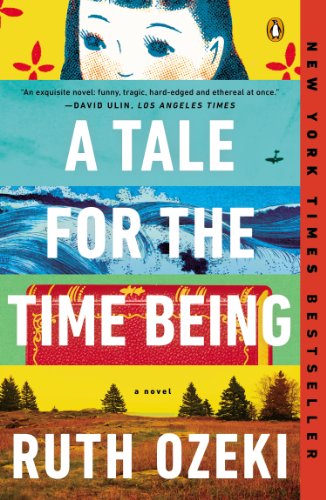
A Tale for the Time Being

I’m reading this time warped historical novel by Ruth Ozeki that includes my favorite 13th century Japanese philosophers, Dogen Zenji. I’m only 25% in but this great and has my attention and imagination. Ruth’s writing is fantastic and fanciful. Instructive in that it is very, very descriptive. Something my writing sorely lacks. Ruth weaves autobiographical data with fiction in a caring way that moves me, the reader. Writing what she knows. Two of the characters are married and named Ruth and Oliver. Oliver is the name of her real life husband and an important part of the book is set on an island of the coast of British Columbia and Ruth and Oliver live on an Cortes Island of the coast of British Columbia. This all fits nicely with the story which weaves time and being and time being into the narrative. Multilayered and intriguing on many levels.


More to come, as I continue exploring Dogen’s fascicle in the collection Shobogenzo called “Uji’, which is where he outlines his notions of moments and of time being. 

Caring Matters


Caring matters much more than practice. Caring and the joy of creation. The process of discovery. Caring produces better results, the results we are looking for in life. Play before repetition. Practice and repetition have a place. Practice can help a lot at first but caring is more important ultimately. At first big gains in skill are made with practice. A certain foundation is required to preform. But at a certain level the only thing that separates you is rather and how much you care.

Estimation and prediction

We are poor at estimating the impact something has in our life and the lives of those around us. We overestimate what we can accomplish in a short time frame and underestimate what we can accomplish in a long time frame. 

These two truisms together show us that our prediction ability is in most areas severely lacking. We can never see the forwarded consequences of a smile or a kind word and don’t usually take the time to recognize that by going for a walk today will lead us to greater health and fitness in the long term. We are quick to say that what will just one smile do or one fatty dessert do to our health and happiness but as Anne Dillard said "How we spend our days is, of course, how we spend our lives. What we do with this hour, and that one, is what we are doing... Each day is the same, so you remember the series afterward as a blurred and powerful pattern.” 


What path will my funeral open?

From Edge.org:

Science advances by discovering new things and developing new ideas. Few truly new ideas are developed without abandoning old ones first. As theoretical physicist Max Planck (1858-1947) noted, “A new scientific truth does not triumph by convincing its opponents and making them see the light, but rather because its opponents eventually die, and a new generation grows up that is familiar with it.” In other words, science advances by a series of funerals. Why wait that long?

Learning and Application

Learning and acquisition of knowledge is not an indication of growth. The application of what we learn into our lives is where the growth happens. Learning + application equals growth. Nothing else works. Application is so important. Learning without application is worth nothing.

The power of mathematical thinking

Today is a fresh day, a clean slate on which to create our life. Will we take the opportunity? 

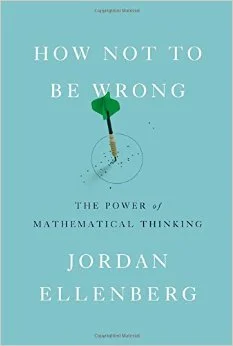
I’m currently reading “How not to be wrong: The power of mathematical thinking” by University of Wisconsin-Madison mathematics professor Jordan Ellenberg.  This after reading "Being Wrong: Adventures in the Margin of Error” by journalist Kathryn Schulz which she argues that we should embrace our errors both large and small. Seemingly a posing views. Ellenberg shows that using a mathematical model of thinking sure can help counterbalance our biases, but Schulz is right, I think, in that when we are in error it is healthy to understand that this normal and in some ways heathy. We are in error about so many things both with a huge social impact and things in our everyday lives and knowing a little math can help.

Anyways, back to the power of mathematical thinking. What impacted me most in the early chapters was the notion that we are often confused by lines and curves. Things like comparing “Swedishness” with prosperity with a graph X being "Swedishness" and Y being prosperity. Should it be a line or a curve? Famously, the Cato Institute posted a blog titled “Why is Obama Trying to Make America More Like Sweden when Swedes Are Trying to Be Less Like Sweden?” This introduces the Laffer curve, an interesting curve where a value first rises in comparison with a second, then falls. Unless you know where you are on the curve you don’t know whether or not increasing or decreasing the second value will rise or lower the first. Ellenberg uses the Laffer curve to talk about our confusion around economics, taxes especially and social policy. 

The content of the middle parts of the book I didn’t find so interesting. The writing kept me engaged. The part where the student from MIT gamed the Massachusetts State lottery using math skills was either above my intellect or my complete disinterest in gambling swage me. Lots of math and I get it, they figured out that the value of a ticket was greater then the cost by enough that by buying hundreds of thousand of tickets you could win tens of thousands of dollars.

Now the book in getting real interesting. Mediocrity and regression are the topics. A lot is made of Francis Galton, scientist and first cousin to Charles Darwin and his book “Hereditary Genius” and his study of the heights of fathers and sons. Here we get introduced to scattergraphs and isopleths.

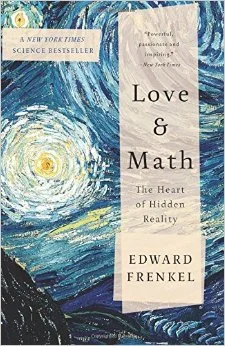
Overall a great read. Ellenberg is engaging as a writer and the ideas he presents are unique, eye opening and mind bending. Math is cool and is everywhere. This book would be a great companion to "Love and Math: The Heart of Hidden Reality" by Edward Frenkel, compelling somewhat autobiographical romance with math. One of his thesis is that if we were taught to draw like we are taught math in grade school, we’d never graduate beyond stick figures and later in life we’d hate art.